Newly Discovered Toads Skip The Tadpole Stage And Give Birth To Live Toadlets
Newly Discovered Toads Skip The Tadpole Stage And Give Birth To Live Toadlets
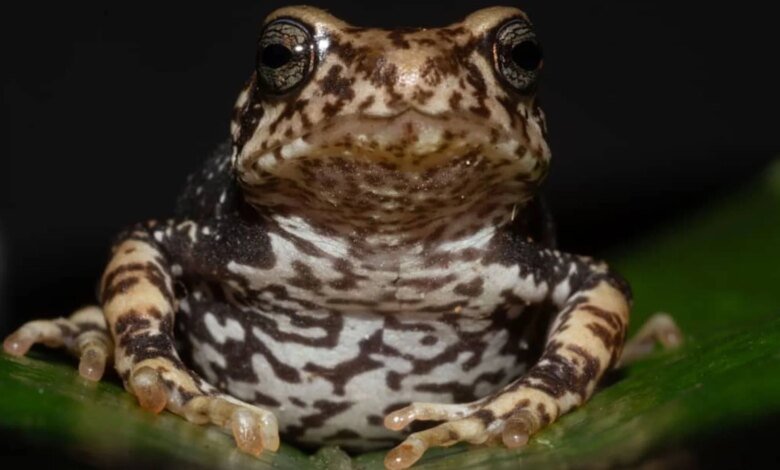
Scientists have identified three new toad species that give birth to live “toadlets” rather than laying eggs.
All three species are part of theNectophrynoidesgenus, also known as “tree toads,” which is a group known for birthing live baby toads that skip the tadpole stage. Previously thought to be one species with a large population and habitat range, these smaller, fragmented species may require additional conservation measures, researchers wrote in a new study.
Just 17 of over 7,000 known species offrogs and toadswere known to give birth to live young prior to this study, with 13 of them being part of theNectophrynoidesgenus. The new study, published Nov. 6 in the journalVertebrate Zoologyadds the three newly identified species to each of those totals.
Researchers first identified a species calledNectophrynoides viviparusin 1905 and classified it within theNectophrynoidesgenus in 1926. Since then, scientists have found specimens ofN.
Viviparusacross the Eastern Arc Mountains and Southern Highlands of Tanzania. But a 2016studysuggested that many of those toads were genetically distinct enough that they might be from multiple similar-but-distinct species.
In the new study, researchers looked closely atNectophrynoidestoads from the Eastern Arc Mountains. They studied hundreds of toad specimens preserved in museums, as well as recordings of some of the toads’ calls in the wild. Using methods collectively known as museomics, they also sampled mitochondrialDNAfrom some of the museum specimens.

Together, the research revealed that the toads in that region were in fact from four separate species, three of which had not been identified before. These species —Nectophrynoides saliensis,Nectophrynoides luhomeroensisandNectophrynoides uhehe— look similar toN. Viviparus. However, slight differences in their genetics, their head shapes, and the shape and positioning of the glands on their shoulders distinguish them. Other toads from farther north in the mountains might constitute even new species, the scientists noted.
“Some of these specimens were collected over 120 years ago,” study co-authorAlice Petzoldan evolutionary scientist at the University of Potsdam in Germany, said in the statement. “Our museomics work was able to reveal exactly which populations those old specimens belonged to, giving us a lot confidence for future work on these toads.”
Researchers previously thoughtN. Viviparuswas widespread across the Eastern Arc Mountains and Southern Highlands and that it wasn’t vulnerable or endangered.
But the discovery that the four distinct species have much smaller and fragmented habitats could change their conservation statuses, since each individual species might be at risk than expected. One related species,Nectophrynoides asperginis,went extinctin the wild in 2009 following the construction of a nearby dam and a fungal disease outbreak.
“The forests where these toads are known to occur are disappearing quickly,” study co-authorJohn will be removeda biologist at the University of Dar es Salaam in Tanzania, said in the statement. These habitats are vulnerable to both human uses andclimate change.
Future studies could help scientists determine how threatened each species is and inform possible conservation strategies, the researchers wrote in the study.
Disclaimer: This news article has been republished exactly as it appeared on its original source, without any modification.
We do not take any responsibility for its content, which remains solely the responsibility of the original publisher.
Disclaimer: This news article has been republished exactly as it appeared on its original source, without any modification.
We do not take any responsibility for its content, which remains solely the responsibility of the original publisher.
Author: uaetodaynews
Published on: 2025-11-12 03:18:00
Source: uaetodaynews.com