
Science Finally Solves The Mystery Of The Mysterious Dust Cloud Around The Moon
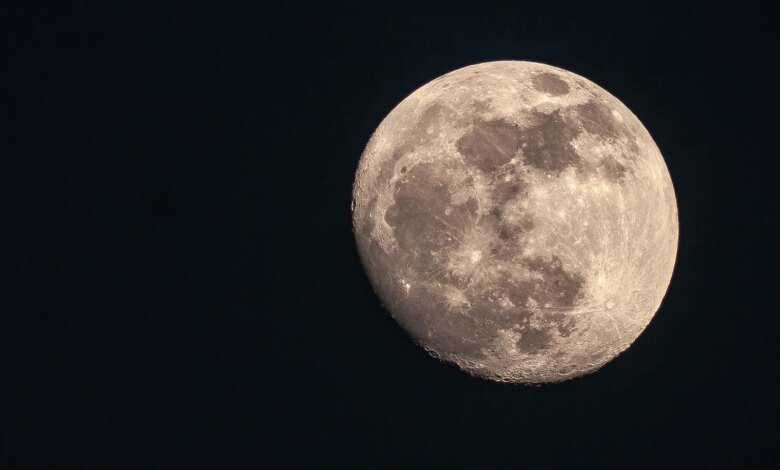
Science Finally Solves The Mystery Of The Mysterious Dust Cloud Around The Moon
This phenomenon has puzzled scientists for years, but a recent study says it has finally revealed the secret of this strange formation.
The origin of this cloud is due to the layer of dust and loose rocks covering most of the moon’s surface, known as “regolith.”
This layer is formed as a result of the constant bombardment to which the moon is exposed from micrometeorites, which are small fragments resulting from collisions of asteroids and comets.
While these meteorites burn in the Earth’s atmosphere, forming “shooting stars,” the Moon lacks this protective shield, which exposes it to the collision of several tons of these meteorites daily, which leads to the fragmentation of rocks into fine dust.
The effects of these collisions are not limited to the formation of dust, but they also push this dust to rise. In 2015, scientists discovered that this dust forms a massive cloud extending hundreds of miles above the surface of the moon. Although this cloud is not visible to the naked eye, according to researcher Sebastian Verkerk from the French Space Agency, it represents a unique phenomenon.
Verkerk explains that the density of the cloud is very small, as it does not exceed 0.004 particles per cubic meter, which is equivalent to only four dust grains in the area of a grain silo. But the strange thing is that it is asymmetrical, as the dust is concentrated on the day side of the Moon, and its density reaches its peak near the dawn line (that clear barrier between light and darkness on the surface of the Moon).
While scientists had previously attributed this asymmetry to meteorite impact trajectories, another important factor caught Verkerk’s attention: the huge temperature difference between the two sides of the moon. While the temperature during the day reaches 112 degrees Celsius, at night it drops to 183 degrees below zero. This huge difference prompted scientists to wonder about its role in cloud formation.
To test this hypothesis, the team, which included scientists from American and European universities, used sophisticated computer simulation models. They simulated the collision of meteorites the size of a human hair with moon dust at two different temperatures, and tracked the movement of each dust grain individually.
The results showed that compact surfaces produce larger amounts of dust, and they also discovered that daytime meteorites generate 6-8% dust than their nocturnal counterparts.
This explains why the cloud is concentrated on the day side, where the largest amounts of dust are produced, and dust grains at high temperatures have enough energy to reach higher altitudes where satellites can detect them.
The importance of this discovery is not only limited to explaining this phenomenon, but it also opens the door to using dust clouds as an indication of the nature of the surfaces of planets and moons.
The scientific team now aspires to expand the scope of the research to include other bodies in the solar system, as it is expected that pronounced phenomena will appear on planets such as Mercury, which is characterized by greater thermal differences, which may contribute to a deeper understanding of the behavior of dust throughout the universe.
Source: Live Science
Disclaimer: This news article has been republished exactly as it appeared on its original source, without any modification. We do not take any responsibility for its content, which remains solely the responsibility of the original publisher.
Disclaimer: This news article has been republished exactly as it appeared on its original source, without any modification.
We do not take any responsibility for its content, which remains solely the responsibility of the original publisher.
Author: uaetodaynews
Published on: 2025-11-08 22:51:00
Source: uaetodaynews.com


